Natural Science - Year II
Unit 34: Welcome to Natural Science Year Two

Science Web Assignment for Unit 34
| This Unit's | Homework Page | History Lecture | Science Lecture | Lab | Parents' Notes |
For 2026: Please note that units are considered "under revision" until two weeks before the class date, and page content, web assignments, and exercises may change before that deadline.
Science Lecture for Unit 34: Doing the Written Work for Natural Science and Reviewing Science Topics from Year One
For Class
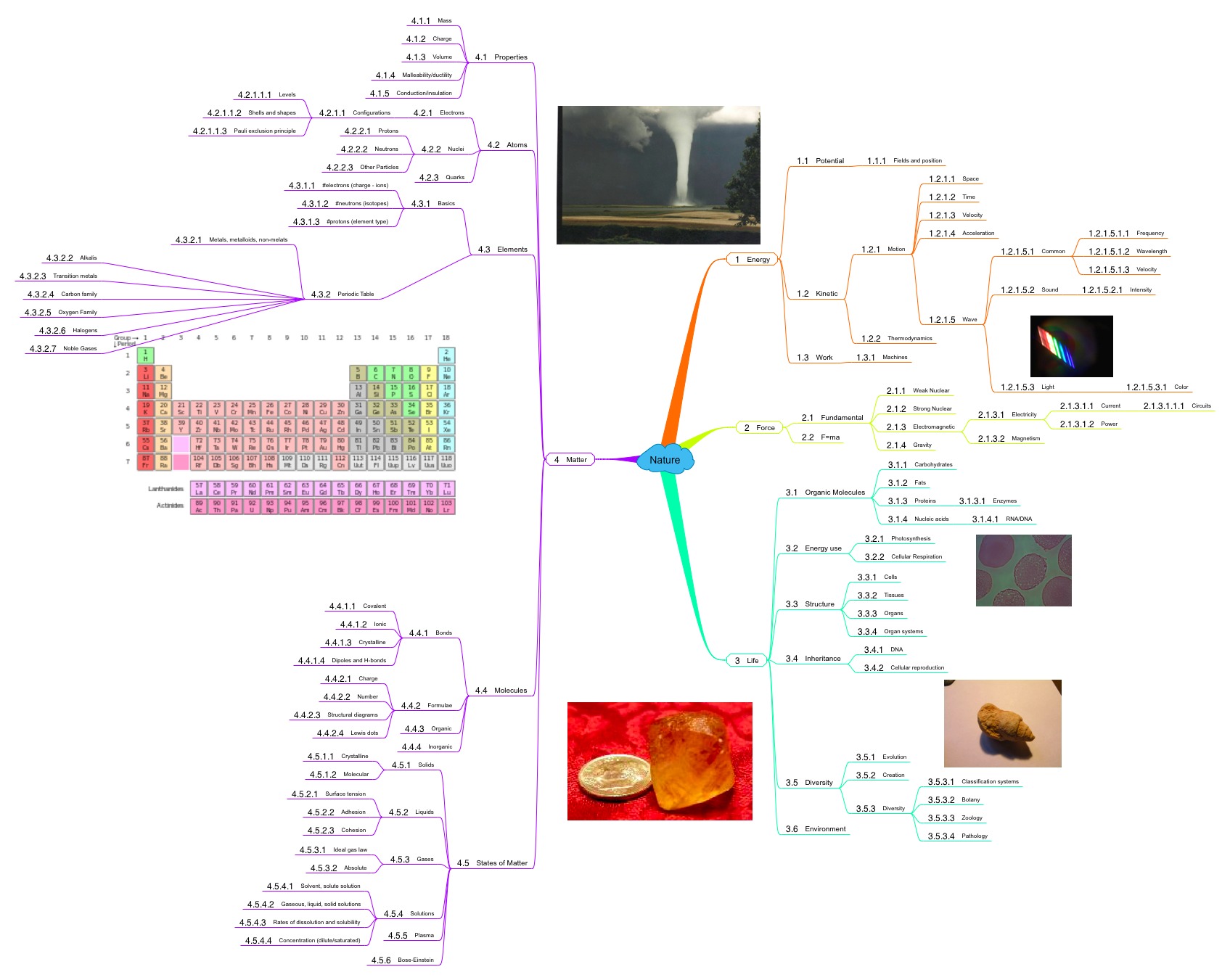
- Topic area: Written assignments for Natural Science/Topics covered in Natural Science Year I (See the Map of Science Topics and the list below!)
- Terms and concepts to know: worksheet, quiz, Moodle, essay, posting assignments
- See historical period(s): None -- "History weblecture" covers chat preparation
Outline/Summary
- Written work for Natural Science
- Study/Discussion Questions
- Further Study
Written Work for Natural Science
Writing the chat preparation essay
Read the following sections in the Student Survival Guide:
- Doing the homework (pay attention to the section on essay questions!
- Getting the Most from Chat
- Quizzes
- Exams
- Study Groups
The first assignment you need to complete (after your reading) is your chat preparation essay. This must be posted to the Moodle before chat starts. That way we can look at your essay and discuss the ideas. That means that the chat preparation essay for unit 0 (this unit) which we discuss at the first chat session is due before that session starts. Fortunately, it is on a topic you should know pretty well.
Your chat preparation essay should be short, not more than 300 words, in three to five paragraphs with multiple sentences. It should have a good topic sentence that answers the question asked. It should present supporting examples, usually a speciric scientific concept or some historical figure or event (with names and dates). A really good chat preparation essay will also mention something about the application of the idea, or its influence or effect on other areas than that defined in the question.
I grade chat preparation essays on a scale from 1 to 3:
- The essay is minimal and answers the question, but displays no real thought. It is a rote answer, merely quoting what was stated in the readings.
- The essay contains good factual examples supporting the idea it describes.
- The essay shows creative thought in some way beyond the material the student read.
Completing the Mastery Exercise
Each unit has a mastery exercise with questions about the reading material. These include multiple choice, chose the correct term, matching, diagram or map labelling, fill in the blank words, short essays, and sometimes even numerical calculation questions.
You should try to complete the mastery exercise before you post your chat preparation essay, since the exercises may help you identify information you need for your essay.
The mastery exercise has feedback to help you quickly identify errors or misconceptions. Be sure to identify any questions you can't answer, or if you don't understand the feedback given in the exercise.
Mastery exercises must be completed satisfactorily, that is, with a score of at least 85% correct, before you can take the quiz. You should try to get the exercise done by Thursday at the latest so that you have time to attempt the quiz before it is due (at the start of the next chat).
Taking Quizzes
Every unit has a quiz. These are in the Moodle, and they have set time periods. They open after chat, when you've had a chance to study the answers for your mastery exercise and "fix" any concepts you missed on the homework assignment. They close before the next chat starts, so that we can discuss them in class.
You may take quizzes only once during the regular term, since you have multiple chances to attempt the mastery exercise in preparation for the quiz. There will be a short period before the semester exam to make up quizzes you may have missed due to illness, network outages, or other issues (like not finishing the mastery exercises in time) — but to take any unit quiz, you must complete the master exercise satisfactorily first.
Quiz results are posted immediately, so that you can see how you did and which questions you missed. You should study missed questions carefully, and review those you got right. Many of these questions will show up again on the semester final examination.
Reviewing for Exams
At the end of each semester, there will be a "comprehensive review", where we go over everything we have learned during the semester, and then take an examination on it. The examination requires you to match people or event names with what happened, to define scientific terms or apply scientific concepts to a particular situation, and to write short essays that pull together ideas from many units.
Exam preparation should start when you take on a new unit, and you should plan regular review sessions throughout the semester, not just one long review session near the end!
Completing Written Work
Click your way through the presentation below to see other ideas on how to prepare and complete your written work for this course.
Concepts we covered in units 1-33
The first year of natural science covered many topics. Some of these will show up again as we continue the study of chemistry, physics, biology, astronomy, and geography through the modern period since the Scientific Revolution. Read through the terms below, and note any concepts you don't understand.
- divisions of science
- life sciences: biology, botany, zoology, anatomy, physiology
- physical sciencies: physics, chemistry, engineering
- earth sciencies: geology, oceanography, meteorology, astronomy
- weather
- atmosphere, climate, temperature, wind, low and high pressure, fronts, thermals
- storms, hurricanes, tornadoes, humidity
- precipitation: fog, rain, snow, sleet, hail
- motions of visible celestial objects
- solar motions: ecliptic, solar day, solar year and annual motion
- lunar motions: orbit, nodes, eclipses, tides
- annual motions: constellations, celestial and alt-azimuth coordinate systems
- planetary motions: retrograde, prograde
- mathematical tools:
- counting, measuring, units, accuracy, error, base and derived quantities
- mathematical analysis: proportion, periodicity
- matter
- states (gas, liquid, solid, Bose-Einstein, plasma)
- matter characteristics: mass, volume, weight, density, plasticity, conductivity
- matter types: elements, compounds, substances and mixtures
- motion
- distance, displacement, speed, velocity, acceleration
- rates and limits
- Ptolmaic astronomy
- deferent, epicycle, eccentric, equant
- life forms
- classification: vertebrates - fish, amphibians, reptiles, birds, mammals
- classification: invertebrates - sponges, cnidarians, flatworms, roundworms, mollusks, segmented worms, arthropods, echinoderms
- organ systems: circulatory, respiratory, integumentary, digestive, endocrine, immune, muscular, nervous, reproductive, skeletal, excretory
- classification: plants - (fungi), bryophytes, ferns, gymnosperms, angiosperms
- wave motion
- types: longitudinal vs. transverse; lasers
- wave properties: wave frequency, wavelength, amplitude
- wave phenomena: Doppler effect
- wave speed = frequency * wavelength
- light and optics
- types of interaction with surfaces: reflection, refraction
- transmission: what happens to light entering a denser medium
- types of lenses: concave lens, convex lens
- translucent, transparent, opaque
- shadows: penumbra, umbra
- paint and light: color subtraction
- focus point, length of a lens
- microscope: compound and simple
- considerations of lenses: chromatic aberration, resolution
- animal anatomy and physiology
- tissue types: epithelial, connective, nervous, muscle
- skeletal structures: exoskeleton, endoskeleton
- major bones of the torso, limbs, and head:....look these up!
- joints: ball-and-socket, hinge, fixed (human skeleton)
- muscle types: smooth, voluntary, cardiac
- smell/taste: chemical receptors
- sight: photoreceptors
- touch, hearing, sense of balance: pressure receptors
- nerve cell components: dendrites, axon
- brain sectors: cerebellum, cerebrum, brain stem (know the functions of each in humans!)
- autotrophic, heterotrophic organisms; filter feeders
- herbivore, carnivore, omnivore
- path of food through digestive system: mouth, pharynx, esophagus, stomach, intestines, rectum
- path of air to the blood stream: nose/mouth, larynx, bronchial tubes, alveoli
- blood through the heart: right atrium, right ventrical, plumonary artery, pulmonary vein, left atrium, left ventrical, aorta, arteries, capillaries, veins, vena cava and home again.
- components of blood: red cells, white cells (lymphocytes), platelets
- hormones and glands
- cells and genetics (microbiology topics)
- cells: single cell organism, multiple cell organism, virus
- cells: plant vs. animal, bacteria vs. eukaryotic
- cell structure: membrane, nucleus, ribosome
- cell components: mitochondria (all), chloroplasts (plants)
- classical mechanics
- force, work, energy, lever, inclined plane (wedge, screw), pulley, gear
- equilibrium: center of mass, translational motion, rotational motion, compression, tensile forces, shear, stress
- falling body under constant acceleration: s = 1/2 * at2
- distance, displacement; speed, velocity
- average, instantaneous (velocity or acceleration)
- determinism
- Newton's laws of motion (3 of them)
- weight vs. mass
- forces: linear, torque, pressure, friction, net
- magnetism, magnetic field, monopole, compass
- gravity, centripetal force, projectile motion
Study/Discussion Questions
- When is the chat preparation due? What makes a good essay?
- When is the Mastery Exercise due? How is it graded?
- When can you take quizzes? How do you know how you did on a quiz?
- What is the scientific "method"?
- What topics and phenomena are appropriately studied this way?
- How are hypotheses, theories, and natural laws related?
Further Study On your Own (Optional)
All "further study" or "optional website" sections are merely suggestions for you to follow up ideas that might interest you. I will not require you to read these, we won't discuss them in chat (unless you have questions about them) and I won't quiz you or examine you on their contents.
- Optional Websites:
- You can read more about the Moodle at The Official Moodle Site.
© 2005 - 2026 This course is offered through Scholars Online, a non-profit organization supporting classical Christian education through online courses. Permission to copy course content (lessons and labs) for personal study is granted to students currently or formerly enrolled in the course through Scholars Online. Reproduction for any other purpose, without the express written consent of the author, is prohibited.